


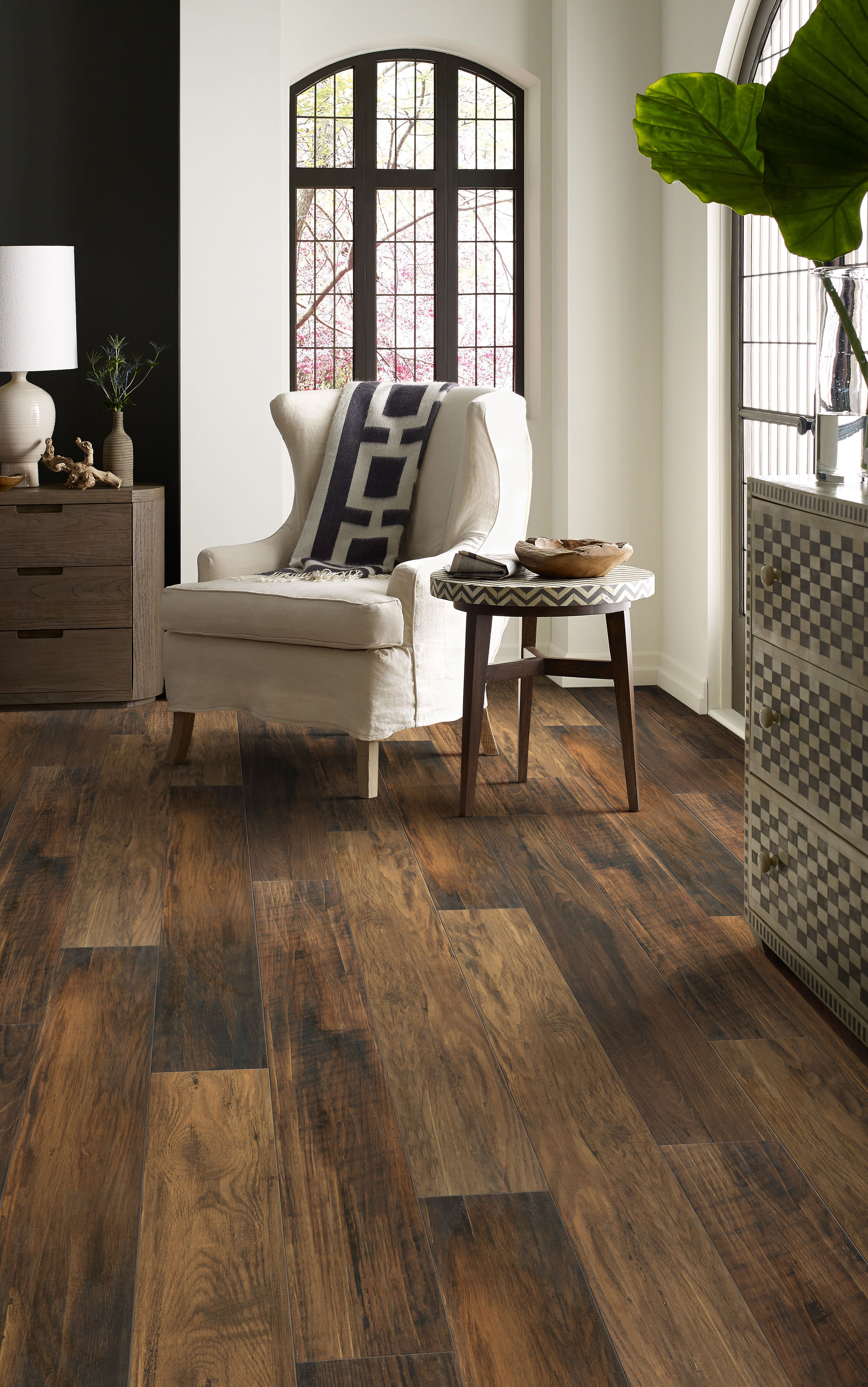
Don't wax laminate floors. Modern laminate comes with a sealed factory finish that wax and polish can't soak into, so instead of protecting anything they dry into a cloudy film that traps dirt, turns slippery, and can void the floor's warranty. If your laminate looks dull, the fix is almost never a coat of wax. Here's why the wax myth won't die, what waxing actually does to a laminate floor, and the short list of things that genuinely keep one looking new.
Should you wax laminate flooring?
No. Laminate flooring already has a hard, clear wear layer sealed on at the factory, and the North American Laminate Flooring Association (NALFA), the trade group that certifies the major laminate brands, is blunt that the surface doesn't need wax or varnish to look good. That top layer is the whole point of laminate: it's what the AC rating grades, one of the 14 checks a floor passes to earn NALFA's seal, and it's built to shrug off the scratches and scuffs a wax coat is supposed to guard against. Adding wax doesn't reinforce a surface that's already sealed, so all it does is leave something extra sitting on top that wasn't designed to be there.
Why does wax ruin a laminate floor?
Wax ruins a laminate floor because the sealed surface gives it nothing to grip, so it can't bond and instead builds up in layers. On a hardwood floor, wax soaks into open wood and hardens into a protective film. Laminate's wear layer is closed and non-porous, tough enough that NALFA's abrasion test spins an abrasive wheel against it in 50-cycle bursts and counts the turns until a 0.60 square-millimeter spot wears through. Wax has no way into a surface like that. It puddles in a thin film that hazes over, holds every footprint and dust mote, and gets dangerously slick when it's fresh. Worse, that film is hard to remove once it's on, and most laminate warranties treat waxing and polishing as misuse, so a waxed floor can lose its coverage right when you might want it.
Where the "wax your floors" idea comes from
The wax habit is a holdover from real wood and old vinyl, and laminate gets caught in the crossfire because it looks like wood. For generations, hardwood and no-wax vinyl were kept up with paste wax or liquid polish, and that routine got handed down as just what you do to a wood floor. Laminate has only been in homes for a little more than 30 years, and it arrived looking like planks of oak or hickory, so the same instinct followed it in the door. The look is wood; the surface is a printed image under a sealed coating, and it asks for the opposite care.
What should you use to clean laminate instead?
Clean laminate with a dust mop or vacuum for the daily grit and a barely damp mop for the rest, and skip anything oily, abrasive, or soaking wet. Loose dirt is what actually dulls a floor, because grit under shoes acts like sandpaper on the wear layer, so sweeping or vacuuming often matters more than any product. For a deeper clean, the major makers' care guidance lines up: use a cleaner made for laminate, keep away from steel wool, abrasive powders, and strong ammonia or chlorine cleaners, and never wet-mop with soap, oil-soap, or standing water. The damp-not-wet rule is the one that saves floors: laminate's wood-fiber core swells if water works into the seams, which is the exact failure NALFA measures by soaking a sample for 24 hours and reading how much it puffs up.
Do | Skip |
Dust mop or vacuum often | Wax, polish, or acrylic floor "restorer" |
Damp mop, wrung nearly dry | Wet mopping or a bucket of soapy water |
Cleaner made for laminate | Oil soap, steel wool, abrasive powder |
Wipe spills right away | Steam mops |
Felt pads under furniture | Strong ammonia or bleach cleaners |
One thing worth knowing: the makers don't all agree on the details. Some steer you away from ammonia entirely, while others publish a homemade mix of 1 cup of household vinegar or 1/3 cup of ammonia to 1 gallon of warm water. That gap is nothing to lose sleep over; it just means the safe move is to follow the care sheet for your specific floor rather than a generic tip online. Steam mops are the one nobody should use: a steam mop drives hot moisture straight down into the seams, working against both the no-wet-mopping rule and the swelling weakness the core already has. If you want a floor that stays cleanable for the long haul, the laminate in our laminate collection comes with the maker's own care instructions, and we go through them at handoff.
How do you make laminate shine without wax?
You bring back laminate's shine by cleaning off the haze and the grit, because the gloss is baked into the factory finish rather than added by a product. When a laminate floor looks dull, it's usually a film of old cleaner residue, dust, or a past coat of polish sitting on top of a finish that's still fine underneath. A damp pass with a laminate-safe cleaner and a dry buff with a soft cloth pulls that film off and lets the built-in sheen show again. Keeping it that way is mostly prevention: a mat at each door catches the grit and road salt that scratch a finish flat over a Northeast Ohio winter, and felt pads under chair legs stop the fine scratches that no product fills.
What if my laminate is already waxed or hazy?
A floor that's already been waxed can usually be recovered by stripping the buildup gently, but go by the manufacturer's method rather than a harsh stripper. Start with the mildest approach, a laminate-safe cleaner and a well-wrung cloth, and lift the film in passes instead of soaking it. Aggressive strippers and scrubbing pads can scratch or dull the wear layer while you're trying to clean it, which trades one problem for a worse one. If the haze won't lift or the finish underneath is already scratched through from years of grit, that's the point where cleaning stops helping and it's worth pricing a replacement rather than fighting a floor that's past its finish.
Common questions about laminate and wax
Can I use a polish or "floor restorer" instead of wax?
Skip the acrylic polishes and "restorers" too, because they behave like wax on a sealed laminate surface. They dry into a film that can't bond, so they haze, peel at the edges, and collect dirt, and they're just as hard to strip back off. If a laminate floor looks tired, clean it properly first; a good cleaning brings back more shine than any bottle promising to restore it.
Does laminate ever need refinishing like hardwood?
No, laminate can't be sanded and refinished the way hardwood can, because the wood look is only a printed layer over the core, with no solid wood to cut back into. NALFA makes this point directly: unlike hardwood, laminate floors don't get sanded or refinished. When the wear layer is worn through, the floor is replaced rather than resurfaced, which is one reason it pays to protect the finish you have.
Will vinegar hurt my laminate floor?
Vinegar is fine on laminate when it's well diluted and the maker allows it, and harmful when it's used straight. Some brands publish a mix of about 1 cup of vinegar to 1 gallon of water, while others steer clear of acidic cleaners entirely. Undiluted vinegar is acidic enough to dull the finish over time, so if you use it, keep it weak, and if your floor's care sheet says no, believe it over a cleaning-hack video.
Keeping your laminate looking new
Laminate stays looking new on almost nothing: sweep or vacuum the grit, damp mop with a laminate-safe cleaner, wipe spills before they sit, and leave the wax in the garage. Carpet Country has sold and installed laminate for Northeast Ohio homes since 1974. If a floor has been waxed, hazed, or scratched past saving, we can tell you honestly whether it cleans up or whether it's time to replace it. When you're weighing new laminate or a fresh floor, request a free in-home estimate and we'll look at what you have and walk through the options. For day-to-day spills and marks, our guide to dealing with stains on laminate covers the rest.


