


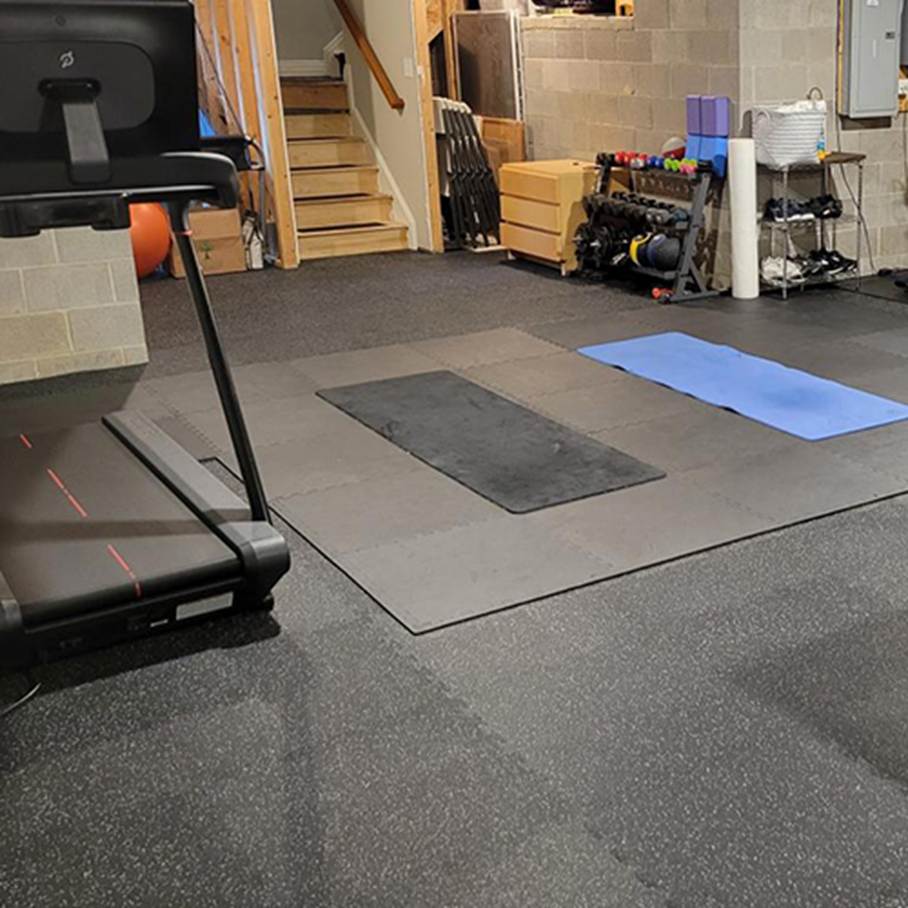
You don’t need a full basement renovation to build a home gym that actually gets used. Often, the space is already there — it’s the surface under your feet that holds everything back. Cold concrete, old carpet, or noisy tile can make workouts less comfortable, harder on joints, and tougher on the rest of the house.
A well-planned floor turns a spare room or basement corner into a space where you can lift, stretch, and hop on the bike without worrying about moisture, noise, or damage.
What Home Gym Floors Really Need to Handle
Before thinking about style, it helps to look at what a gym floor goes through day after day. Free weights, adjustable benches, and cardio equipment concentrate a lot of weight on small points. Exercises like lunges and jump squats add impact. If your gym is in a lower level, seasonal moisture and temperature swings add another layer of stress.
A good gym surface should do three things well: protect your subfloor, cushion your joints, and clean up easily. Waterproof constructions shine here, because they stand up to sweat, spilled water bottles, and the damp air that comes with four true seasons. When the core resists swelling and the surface blocks water, you’re far less likely to see buckling, gapping, or musty odors over time.
Why Waterproof Flooring Works So Well for Home Gyms
Waterproof plank and tile products give you the resilience of a traditional gym floor without the maintenance headaches of hardwood or the chill of bare concrete. Many modern options combine a rigid core with a tough wear layer, so they shrug off dropped dumbbells better than you might expect and resist scuffs from shoes and equipment.
If your workout space shares duty as a playroom or TV room, this type of surface also makes it easy to wipe away snacks, pet accidents, or post-practice mud. For homeowners who want to dig deeper into specific materials, it can be helpful to look through waterproof flooring for Ohio homes and compare how different constructions handle moisture and daily wear. You’ll see options designed with basements, flex rooms, and active households in mind.
Key idea: a waterproof core doesn’t just save you from spills — it adds long-term stability in spaces where humidity and temperature change with the seasons.
Luxury Vinyl: When You Want Gym Performance and Finished-Room Style
Many people don’t want their workout zone to feel like a commercial gym. They’d rather have a space that blends in with the rest of the house, especially when the room doubles as a guest space or home office. This is where luxury vinyl plank and tile stand out.
High-quality luxury vinyl can mimic hardwood or stone while still offering the dent resistance and easy maintenance that make sense for exercise. Underfoot, it feels warmer than tile and more forgiving than concrete, which matters during floor work or stretching. If you’re curious about the range of looks available, you can explore luxury vinyl options to see how wood tones, wide planks, and textured finishes might fit the style of your home.
For families with kids or pets running through the same space, the ability to sweep, damp mop, and get right back to life is often the deciding factor.
Practical Design Tips for a Home Gym Floor That Lasts
Once you’ve narrowed in on waterproof or luxury vinyl, a few design choices will make the room work better day to day. Lighter wood tones can brighten a basement and make smaller rooms feel larger, while medium colors tend to hide dust and footprints between cleanings. A subtle texture on the surface adds grip for training days without feeling rough under bare feet.
It also helps to think about transitions. If your gym opens into a finished hallway or family room, choosing a plank size and color that coordinates with nearby floors creates a smoother visual flow. Visiting a showroom to see samples in person can make it easier to compare thickness, texture, and sound underfoot, especially if you bring along a shoe you typically wear to work out.
Finally, many homeowners like to layer a few rubber mats in high-impact zones, such as under a rack or bike. The right hard-surface floor underneath those mats keeps the space looking finished while still protecting the structure of the home.
Ready to Plan Your Home Gym Floor?
A thoughtful gym floor should match how you actually live: early-morning treadmill sessions, weekend lifting, kids’ dance videos, and everything in between. Waterproof and luxury vinyl options make it possible to have a space that feels polished, stands up to moisture, and cleans up fast after a tough workout.
If you’re thinking about turning a spare room or basement corner into a dedicated fitness area, you can get expert guidance on your project and talk through which flooring constructions, thicknesses, and styles will fit your home best.


