Request an estimate
About Vinyl Flooring: Your Twinsburg, OH Guide
Vinyl flooring is the practical workhorse of the flooring world. It is waterproof, soft and warm underfoot, easy to clean, and one of the most budget-friendly ways to give a kitchen, bathroom, laundry room or basement a fresh look. It also comes in more forms than most people realize, from seamless sheet vinyl to rigid luxury vinyl planks, and matching the right type to each room is where the real value lies.
Carpet Country Flooring & Design Center has served the Twinsburg area since 1974, and our showroom lets you compare vinyl side by side with every other floor we carry. You can browse our sheet vinyl collection from Mannington online, and when you want a price for your actual rooms, schedule a free estimate.
Carpet Country Flooring & Design Center has served the Twinsburg area since 1974, and our showroom lets you compare vinyl side by side with every other floor we carry. You can browse our sheet vinyl collection from Mannington online, and when you want a price for your actual rooms, schedule a free estimate.
What Is Vinyl Flooring? Sheet, Tile and Luxury Vinyl
Vinyl is a family of resilient floors made mainly from PVC (polyvinyl chloride), a material that doesn't absorb water. It comes in three main forms:
Luxury vinyl has its own category in our catalog, and our page on luxury vinyl plank and tile covers its styles, durability and installation options in depth.
- Sheet vinyl: rolled flooring, most often 12 feet wide, installed as one continuous piece in most rooms. Few seams make it the most water-tight option, and its cushioned layers make it comfortable to stand on.
- Vinyl tile: individual squares, from the vinyl composition tile (VCT) you see in schools and stores to peel-and-stick tiles for quick updates.
- Luxury vinyl plank and tile (LVP and LVT): thicker, rigid planks and tiles with realistic wood and stone visuals and a heavier wear layer, usually installed as a click-together floating floor.
Luxury vinyl has its own category in our catalog, and our page on luxury vinyl plank and tile covers its styles, durability and installation options in depth.
How Sheet Vinyl Is Built
Sheet vinyl is a layered product, and each layer has a specific job:
The quality differences you will notice come from the thickness of the wear layer, the realism of the print and embossing, and the density of the cushion. Better grades hold their looks longer in busy kitchens and stand up better to dents.
- Wear layer: a clear, tough top coat, usually with a urethane finish, that resists scuffs and stains and means you never need to wax.
- Design layer: a high-resolution printed image of wood, stone or tile. Better products add embossing that follows the pattern, so grout lines and wood grain have real texture.
- Cushion layer: a foam or vinyl core that makes the floor softer, warmer and quieter underfoot than tile or plank flooring.
- Backing: fiberglass or felt. Fiberglass-backed sheet vinyl is flexible and stays flat, so it can often be glued only at the edges and seams. Felt-backed sheet vinyl is glued across the entire floor.
The quality differences you will notice come from the thickness of the wear layer, the realism of the print and embossing, and the density of the cushion. Better grades hold their looks longer in busy kitchens and stand up better to dents.
Is Vinyl Flooring Waterproof?
Yes. Vinyl doesn't absorb water, so spills, splashes and wet boots can't swell or warp it the way they damage wood-based floors. Sheet vinyl goes a step further: because a typical room is covered with a single piece, there are few or no seams where water could slip through to the subfloor. That is why it has long been the standard for bathrooms and laundry rooms.
Waterproof and water-resistant are not the same thing, and the difference matters when you compare floors for a kitchen or basement. This breakdown of how to tell whether a floor is truly waterproof or just water-resistant walks through the specs, core materials and warranty language worth checking.
Even a waterproof floor can't protect what is underneath it from a flood. A burst pipe or a slow leak that reaches the subfloor can damage the subfloor and weaken the adhesive, so fix plumbing problems quickly and read the warranty's terms before you buy.
Why Vinyl Makes Sense in Northeast Ohio Homes
Our climate asks a lot of a floor, and vinyl answers most of it. Snow, slush and road salt come through the back door all winter, humid summers push moisture into lower levels, and many homes around Twinsburg, Hudson, Solon and Macedonia have basements built on concrete slabs. Here is where vinyl earns its keep:
- Mudrooms and back entries: salt and meltwater wipe right up, and a seamless sheet floor keeps puddles on the surface instead of in the seams.
- Laundry rooms: a washer leak or overflow stays on the surface, where you can mop it up.
- Basements: vinyl is one of the best floors below grade, provided the slab is checked for moisture and prepared properly. Our step-by-step plan for waterproof flooring in Twinsburg basements explains what that looks like, from slab prep to transitions.
- Rentals and turnovers: tough, affordable and quick to clean between tenants, vinyl is a favorite with property owners, and property management flooring is one of our specialties.
Sheet Vinyl vs. Luxury Vinyl Plank (LVP)
Choose sheet vinyl when you want the most water-tight floor at the lowest cost. Choose LVP when you want the most realistic wood look and a rigid floor that hides small subfloor imperfections. Here is how they compare:
- Seams and water: sheet vinyl covers most rooms in one piece. LVP has a seam at every plank edge, and while the planks are waterproof, standing water can find its way through the joints to the subfloor.
- Look: LVP's thick planks, deep embossing and beveled edges read more like real hardwood. Sheet vinyl prints have come a long way, and its stone and tile looks are especially convincing.
- Comfort: cushioned sheet vinyl is softer and warmer to stand on, a real advantage in kitchens.
- Dents and repairs: rigid-core LVP resists dents from heavy furniture better, and a damaged plank can be swapped out. Sheet vinyl can dent under narrow point loads and tear if an appliance is dragged across it, and repairs mean patching in a matched piece.
- Subfloor: sheet vinyl follows every bump and gap in the floor beneath it, so it needs a smooth, flat underlayment. LVP is more forgiving of minor imperfections.
- Cost: sheet vinyl is usually the more affordable choice in both materials and installation.
Vinyl vs. Laminate and Tile
Vinyl wins on water, while laminate and tile each win somewhere else. Laminate has a harder, more scratch-resistant surface and a firmer, wood-like feel, but its wood-fiber core makes it less tolerant of water than any vinyl. That makes laminate a strong pick for living rooms and bedrooms and vinyl the safer bet for wet areas.
Porcelain and ceramic tile are harder still and can last for decades, but they feel cold and hard underfoot, and grout lines need regular upkeep. Stone-look vinyl gives you a similar style with more warmth, more cushion and no grout to scrub.
Porcelain and ceramic tile are harder still and can last for decades, but they feel cold and hard underfoot, and grout lines need regular upkeep. Stone-look vinyl gives you a similar style with more warmth, more cushion and no grout to scrub.
Is Vinyl Flooring Safe? VOCs and Indoor Air Quality
Certified low-VOC vinyl meets strict indoor air quality standards, which makes it a sound choice for most homes. VOCs, or volatile organic compounds, are chemicals that can evaporate from new flooring, adhesives and finishes, and they are behind the new-floor smell sometimes called off-gassing. You can keep emissions low with three simple steps:
Our article explaining what VOCs are and which certifications to look for goes deeper into vinyl and indoor air quality.
- Look for certification: FloorScore, one of the most widely recognized indoor air quality certifications for flooring, and UL GREENGUARD both test products for low VOC emissions.
- Ask about adhesives: with glued-down sheet vinyl, a low-VOC adhesive matters as much as the floor itself.
- Ventilate after installation: open windows and run fans for the first few days while any smell fades.
Our article explaining what VOCs are and which certifications to look for goes deeper into vinyl and indoor air quality.
Choosing Vinyl Room by Room
Vinyl can go almost anywhere in your home, but some rooms play to its strengths more than others:
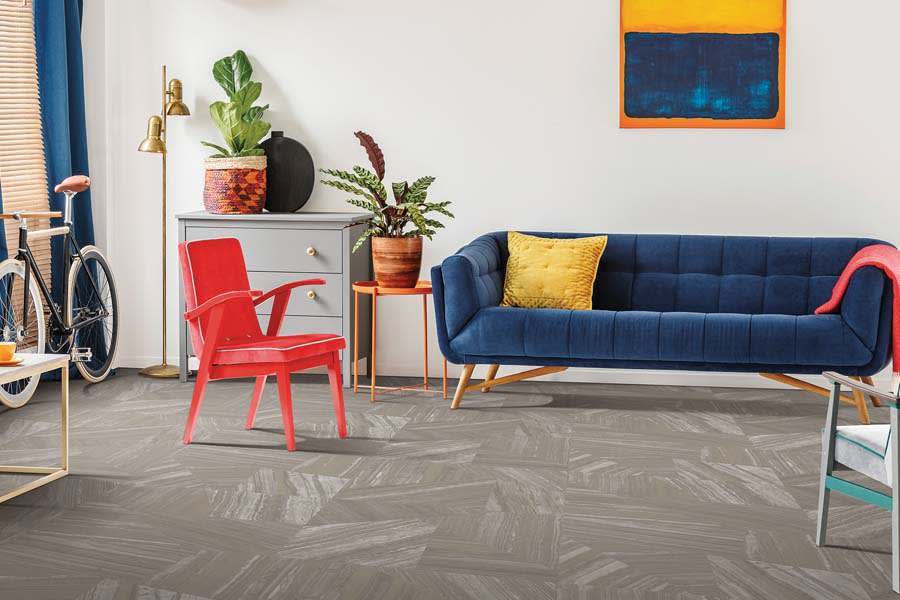
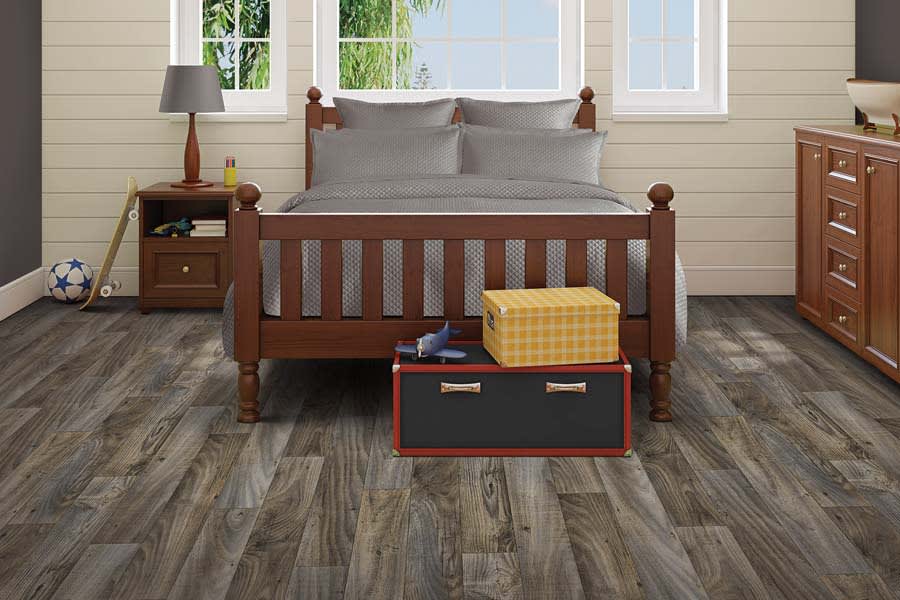
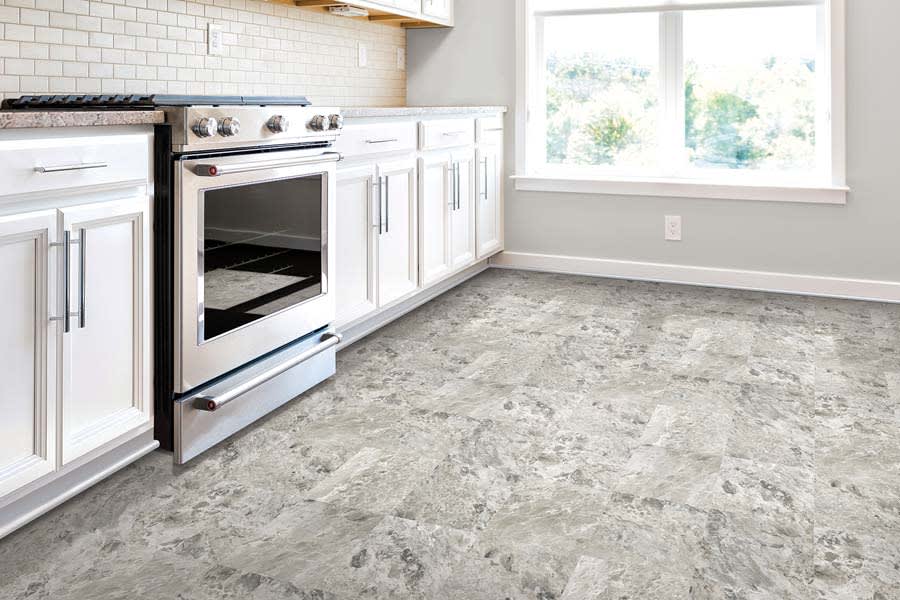
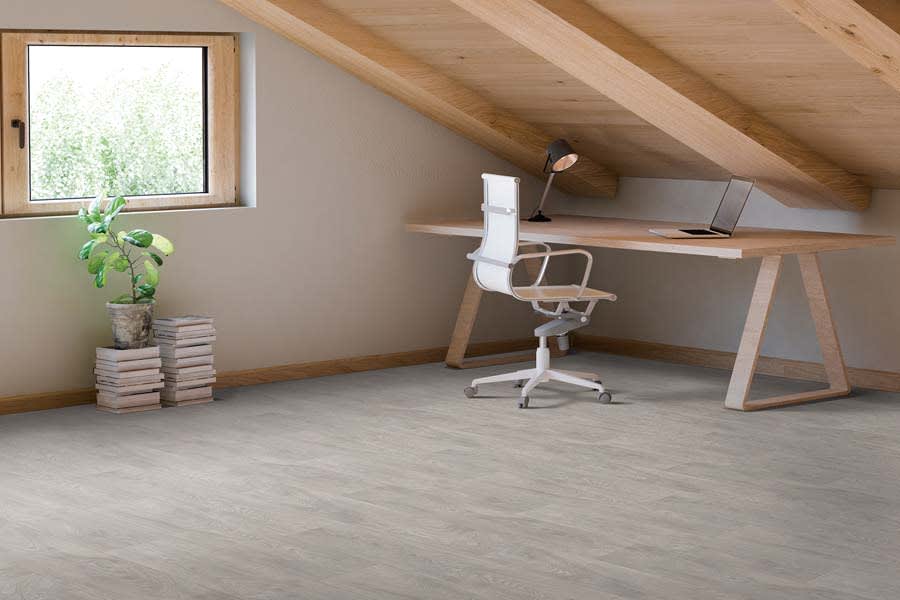
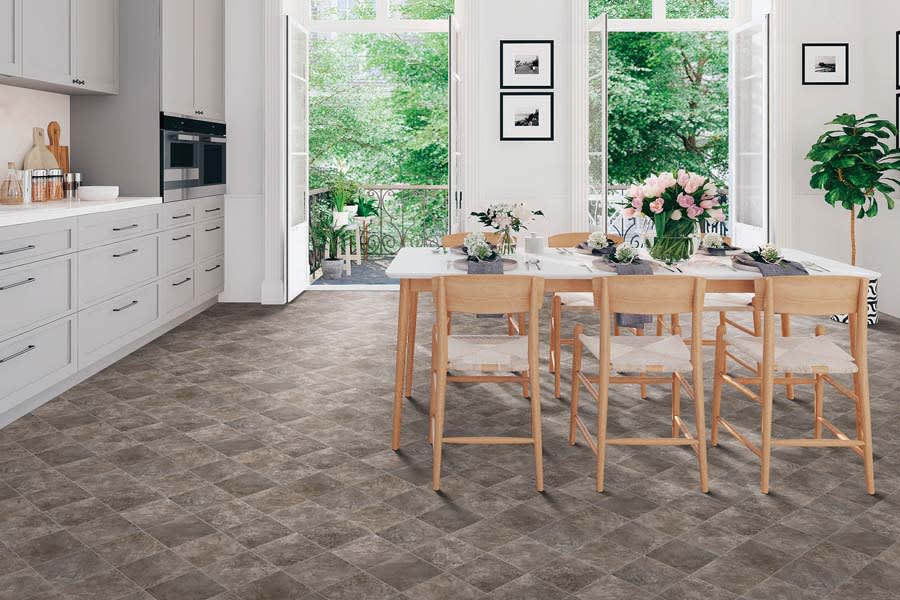
Sheet vinyl comes in two main looks. Our wood-look sheet vinyl brings warmth to kitchens and family spaces, while stone-look patterns suit bathrooms, laundry rooms and entries.
- Kitchens: cushioned sheet vinyl is easy on your feet during long cooking sessions and shrugs off spills. Use wide protectors under appliance feet and never drag a refrigerator or range across the floor.
- Bathrooms: seamless sheet vinyl is a natural fit for the bathroom floor. Inside the shower is a different story, and this article explains why waterproof floors aren't suitable for a shower and what works better there.
- Laundry rooms and mudrooms: seamless protection against leaks and meltwater, finished with a mat that is safe for vinyl.
- Basements: sheet vinyl or LVP over a properly prepared slab. If the space doubles as a family room, LVP's wood look makes it feel like part of the main floor.
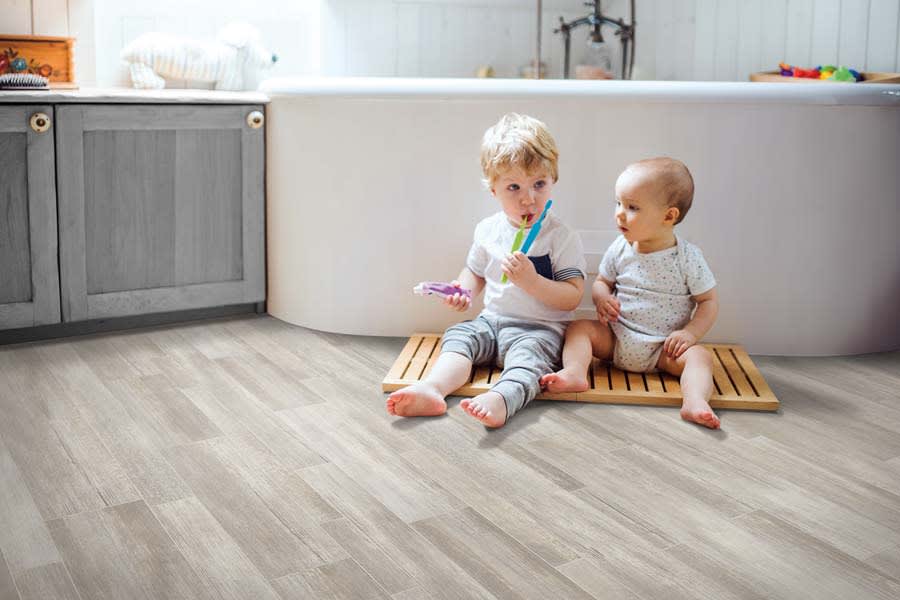
- Kids' rooms and playrooms: soft, quiet and easy to wipe clean after art projects and snack time.
Sheet vinyl comes in two main looks. Our wood-look sheet vinyl brings warmth to kitchens and family spaces, while stone-look patterns suit bathrooms, laundry rooms and entries.
What Affects the Cost of Vinyl Flooring?
Vinyl is one of the most affordable floors you can buy, but several factors shape your project total:
The most reliable way to price your project is to have your rooms measured, so book your free in-home estimate and get an accurate number. We also offer flooring financing if you would rather spread out the cost.
- Type: sheet vinyl usually costs the least, while LVP costs more and premium LVP more still.
- Grade: wear layer thickness, cushion and print realism all move the price.
- Room size and shape: sheet vinyl comes in fixed roll widths, so a room wider than the roll needs a seam, and oddly shaped rooms create more waste.
- Subfloor prep: because sheet vinyl shows every flaw beneath it, old flooring often comes up and new underlayment goes down first.
- Trim and transitions: baseboard or quarter round, thresholds, and transitions to carpet, hardwood or tile.
The most reliable way to price your project is to have your rooms measured, so book your free in-home estimate and get an accurate number. We also offer flooring financing if you would rather spread out the cost.
Why Sheet Vinyl Is a Job for Professionals
Sheet vinyl looks simple, but it is one of the least forgiving floors to install yourself. The rolls are large and heavy, every cut around cabinets, toilets and door casings has to be exact, seams need to be sealed so they virtually disappear, and any bump or gap in the subfloor will show through the finished surface. Our professional flooring installers take care of that precision work, so your floor goes down smooth and the seams stay tight. 
How to Care for Vinyl Floors
Vinyl is one of the easiest floors to maintain, and a few habits keep it looking new:
- Sweep or vacuum regularly on the hard-floor setting to keep grit from dulling the finish.
- Damp-mop with a pH-neutral cleaner made for vinyl. Skip abrasive powders, harsh solvents and mop-and-shine products, which leave a dulling film.
- Don't wax. The factory no-wax finish is designed to stay clean with simple mopping.
- Avoid rubber-backed mats, which can permanently discolor vinyl, and choose mats labeled safe for vinyl floors.
- Put wide, non-staining protectors under heavy furniture, and use blinds or curtains to limit fading in rooms with strong afternoon sun.
Vinyl Flooring FAQs
What is the difference between vinyl and linoleum?
Linoleum is a natural floor made from linseed oil, cork or wood flour and limestone on a jute backing, while vinyl is a synthetic floor made from PVC. Linoleum needs periodic sealing and can be damaged by standing water. Vinyl is more water-resistant, lower maintenance and usually more affordable, even though many people use the two names interchangeably.
Does vinyl flooring off-gas?
Some new vinyl floors give off a mild odor for a few days after installation, especially glued-down floors. Choosing certified low-VOC products and adhesives keeps emissions low, and ventilating the room for the first few days clears any smell quickly.
How long does sheet vinyl last?
Quality sheet vinyl commonly lasts 10 to 20 years, depending on its wear layer, the traffic it sees and how it is cared for. LVP with a thick wear layer typically lasts longer, which is part of why it costs more.
Does vinyl flooring dent?
It can. Cushioned sheet vinyl is soft by design, so narrow chair legs, appliance feet and heavy furniture can leave impressions. Wide floor protectors spread the weight, and rigid-core LVP is the better choice for rooms filled with heavy furniture.
Is vinyl flooring good for homes with pets? Yes. Vinyl is waterproof, so accidents and splashing water bowls wipe up without damage, and its softer surface is quieter under paws than tile or laminate. Claws can scratch any floor, so look for a thicker wear layer, keep nails trimmed, and consider rigid LVP with a heavy wear layer for large, active dogs.
Where can I see vinyl flooring near Hudson, OH?
You can see it at our Twinsburg showroom, just minutes from Hudson. We also serve Solon, Macedonia, Aurora, Boston Heights and the surrounding Northeast Ohio communities. If you live in Hudson and are leaning toward planks, our page on waterproof luxury vinyl in Hudson, OH has more local details.
Find Your Vinyl Floor at Our Twinsburg Showroom
Seeing vinyl in person makes the decision easier. You can feel the cushion of sheet vinyl, compare it with rigid luxury vinyl planks, and hold samples next to your cabinets and paint colors. Visit the showroom on Darrow Road, where our in-house design consultants will help you narrow the options and find the right vinyl for every room on your list.