


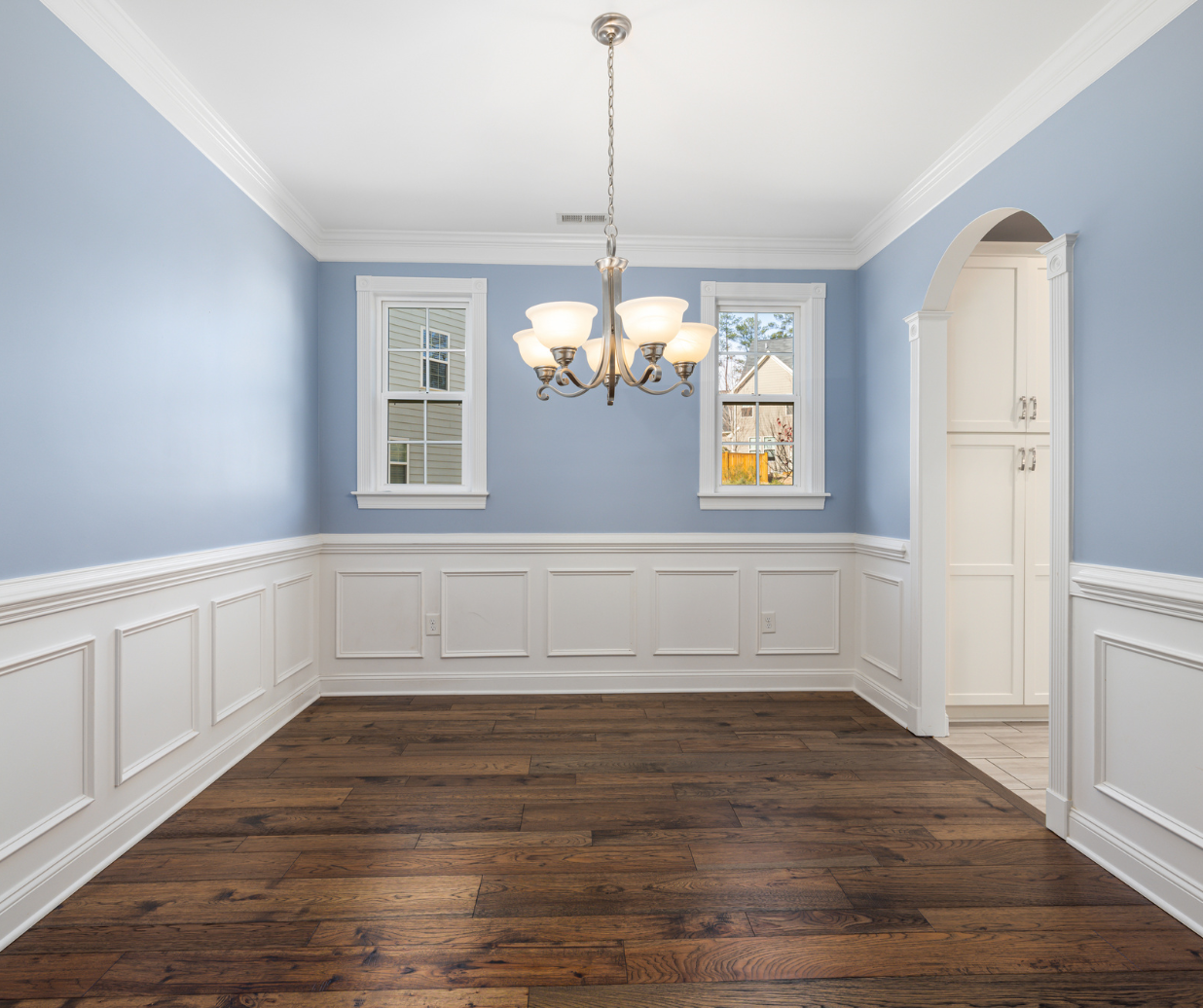
If you’re replacing worn floors, laminate can look like an easy decision—until you realize there’s a big difference between the most affordable options and the upgraded lines. At first glance, both may mimic hardwood. A few months later, though, the cheaper choice can start to show where corners were cut. In a place like Northeast Ohio, where wet boots, road salt, and seasonal humidity are part of everyday life, that matters more than people expect.
What “entry-level” usually gets you
Budget-friendly laminate has a real purpose. It can work well in guest rooms, low-traffic spaces, or homes where price is the biggest priority. Most entry-level products give you the basic look of wood at a lower cost, and for some projects, that’s enough.
The tradeoff is usually in the details. Lower-tier planks often have thinner cores, simpler locking systems, and less texture variation from board to board. That can affect how the floor feels underfoot, how well it handles small subfloor imperfections, and how convincing it looks once the whole room is installed. If you’re comparing styles, it helps to browse laminate options side by side so those differences are easier to spot.
Where premium laminate earns its keep
The upgrade starts making sense when the room gets used hard. Better laminate typically offers a thicker construction, stronger wear layer, and tighter edge definition. In practical terms, that can mean fewer worries about dents from daily traffic, better resistance to scratches, and a surface that holds its appearance longer.
Appearance is another big separator. Premium lines tend to have more realistic grain patterns, deeper embossing, and wider design variety. Instead of looking like a printed imitation, they do a better job of capturing the warmth people actually want from a wood-look floor. For many homeowners in Twinsburg, that visual difference is what moves the material from “good enough” to something that genuinely elevates the room.
Ohio conditions change the value equation
This is where the decision gets less theoretical. In our region, floors have to deal with slush in winter, humidity in summer, and the grit that gets tracked in between. A product that seems fine in a showroom can struggle once it meets real life.
That doesn’t mean laminate is wrong for busy homes. It means you should match the tier to the space. In entryways, kitchens, or lower levels where moisture is more likely, some shoppers discover they’re better served by moisture-resistant options or even luxury vinyl styles that offer added peace of mind. Premium laminate still performs well in many main living areas, but it’s smartest when selected with the room’s conditions in mind.
So, is the upgrade worth it?
Usually, yes—if the floor is going into a space you use every day. The extra investment often pays you back in durability, better visuals, and a longer period before the floor starts looking tired. If this is for a spare bedroom, a quick resale update, or a low-impact area, entry-level material may be perfectly reasonable. But for active households, the premium tier often feels like the better value, not just the better product.
The same logic applies to light commercial settings. A small office or retail space may need more than a basic residential product can comfortably handle, which is why many owners start by exploring commercial flooring solutions before making a final decision.
In the end, the right choice depends on how you live, where the floor is going, and how long you want it to keep looking sharp. If you’d like help comparing samples in person, visit our showroom in Twinsburg or request your free estimate to get guidance tailored to your home.


